Skip to content
Our Pork · Farm to Fork

A circle, not a line.

The pork we sell starts in our own fields and ends on a plate. Crops grown here, grain milled here, pigs fed here, manure returned here, pork sent on to nearby processing facilities and into Procter's Sausages. The detail behind how the model works.

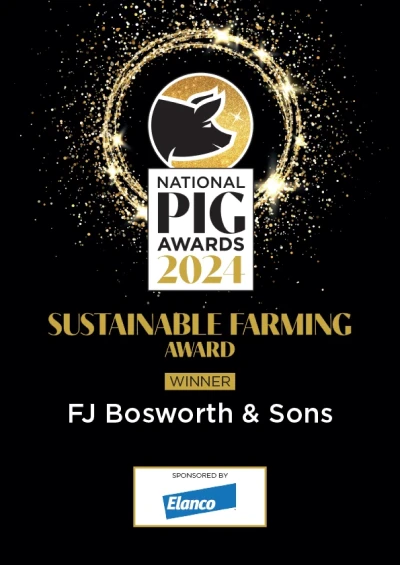
National Pig Awards Sustainable Farming 2024 Spains Hall, Willingale, Essex
Read the model

Most British pork is produced in a linear supply chain. Feed is sourced and blended by specialist compounders, often using imported ingredients. It is delivered by lorry to the farm. The pigs eat it. The pork goes off to processing somewhere else, and the manure becomes a waste-management problem rather than a nutrient. It works, it is efficient on capital, and it is the way the industry is largely set up. We do it differently.

What follows is the detail behind the circular model that earned us the National Pig Awards Sustainable Farming Award in 2024. Six stages, in the order they happen. Each one is described as honestly as we can: what we actually do, why we do it that way, and what the trade-offs are. This is not a marketing diagram; it is the operation.

The model

Six stages, in the order they happen.

Vertical sequence, image opposite content. The thread running down the page links each stage to the next, and loops back from the plate to the soil. Stage 5 (processing) runs typographically: the work happens off-site at someone else's facility, and a generic transport shot does not earn its place.

Stage 01
Stage 01 of 06

The crops.

We grow arable crops across 330 hectares at and around Spains Hall in Willingale, Essex. The rotation is conventional in mix (cereals primarily, with the usual break crops and stewardship areas), but the destination of the grain is unusual: most of the cereal harvested here are kept on the farm rather than sold on the open market.

330 ha
arable land
Most
of cereal kept on-farm
Stage 02
Stage 02 of 06

The mill.

The grain is stored on the farm after harvest and milled on-site through the year as the pigs need it. The mill is mainly powered by solar-generated electricity from panels installed on the farm, which means the electricity that turns the grain into feed is also produced here. The milling operation runs through the working day, when the solar is generating.

100%
solar-powered milling
Yr round
as the pigs need it
Stage 03
Stage 03 of 06

The pigs.

Our pigs are housed in modern indoor facilities and fed primarily on the feed milled on-site. Alongside our own cereals, we bring in other bulk ingredients such as soya, rapemeal and maltings to blend a balanced diet, together with the minerals and vitamins that pigs need at different life stages (we are honest that not everything can be produced on the farm). Even so, the bulk of what they eat comes from the grain grown in the fields visible from the housing.

Indoor
welfare-led housing
On-site
milled feed
Stage 04
Stage 04 of 06

The soil.

Pig manure is collected, stored, and applied back to the arable land using our contracting team's slurry equipment. The nutrients that the previous year's crop produced (taken up by the pigs through the feed) are returned to the next year's crop directly. Bagged fertiliser is still applied where the crop needs it (our contracting team applies it for other farmers across Essex as well, with working widths up to 24m), but the contribution from the pigs reduces the gap.

Stage 05 of 06

Processing.

Pigs leave the farm for nearby processing facilities when they reach the right weight and condition. “Nearby” is genuinely meaningful: keeping the journey short reduces stress on the animals and reduces the food miles attached to the eventual product. The processors we work with are Red Tractor assured, which means the welfare and traceability standards that started in the housing continue through to the end of the supply chain.

Nearby
processing facilities only
Assured
red tractor throughout
Stage 06
Stage 06 of 06

The plate.

Some of our pork is then processed into Procter's Sausages, the consumer brand we acquired in 2024, and supplied to trade and hospitality customers through the Procter's team in Ipswich. Most of the pork goes to direct trade customers and butchers; the rest of it goes through Procter's' production and ends up in the range of sausages, patties and related products that Procter's has built its reputation on for decades.

2024
Procter's acquired
Ipswich
the closing point
Visit procters-sausages.co.uk
National Pig Awards 2024 Sustainable Farming Award winner — FJ Bosworth & Sons, sponsored by Elanco.
Recognition

What this model earned.

The model described above is what the National Pig Awards judges looked at when they gave us the Sustainable Farming Award in 2024. We did not win it for a specific project or a specific initiative; we won it for the way the farm runs end to end. The recognition matters because it independently validates that the model holds up under scrutiny.

Award
Sustainable Farming Award
Year
2024
Awarded by
National Pig Awards
See all awards
Looking forward

Where the model goes next.

Our carbon audit has now been completed for a second time, and we are comparing this data with other farming businesses that are also part of AHDB's Environmental Baselining Pilot. This moves the sustainability picture from directional confidence to proper measurement. We are also working on telling the model better, particularly to the people who buy Procter's product and to the trade customers who depend on the supply. The model itself is largely settled, but its measurement, its communication, and the supporting infrastructure (the contracting fleet, the mill, the housing) are continuous projects.

Get in touch

Want to know more about the model?

Trade buyers, journalists, award organisers, and customers curious about how their food is produced are all welcome to get in touch. The route is the same as any other enquiry.